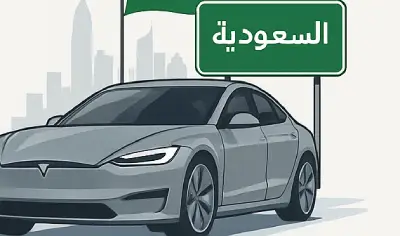
April 2025 saw the official launch of Tesla's operations in Saudi Arabia, in a step representing a strategic expansion into one of the most prominent emerging markets in the field of electric mobility. This direction reflects the company's desire to capitalize on the growing local demand for electric vehicles and Saudi Arabia's support for the transition toward clean energy.
Tesla revealed a comprehensive plan for entering the Saudi market, including making its cars available for direct purchase online, alongside opening interactive showrooms in strategic locations such as major shopping centers, enabling customers to explore and experience the company's latest models.
The plan also includes building a modern network of charging stations to facilitate travel and provide a complete user experience, in addition to establishing specialized maintenance and service centers to support Tesla owners and deliver high-quality after-sales services.
In a notable announcement, the company confirmed it would launch its famous electric truck, the Cybertruck, for the first time outside North America, with sales beginning in Saudi Arabia alongside the UAE and Qatar, with customer deliveries expected to begin by the end of 2025, according to Tesla's official website.
Tesla faces global challenges and fierce local competition in the Saudi market.
This expansionary step from Tesla comes at a time when the company faces tangible challenges on the global front, most notably slowing growth rates and intensifying competition in advanced markets, pushing it to seek new growth horizons in regions with promising potential, such as the Middle East.
In parallel, this launch aligns with Saudi Arabia's efforts within Vision 2030, which seeks to diversify the economy, localize the electric vehicle industry, and reduce reliance on fossil fuels. Tesla's entry into the Saudi market is an additional indicator of the accelerating shift toward sustainable energy in the Kingdom.
However, Tesla's path in Saudi Arabia will not be without obstacles; as it faces fierce competition from local and international players who enjoy strong institutional support and an established market presence. Among the most prominent:
-
Lucid Motors: The Kingdom invests heavily in it, and in September 2023 it opened the first electric vehicle manufacturing facility on Saudi soil, giving it an advantage in the supply chain and logistical support, in addition to its proximity to the local consumer.
-
Ceer: Saudi Arabia's first national electric vehicle brand, established as a joint venture between the Public Investment Fund and Taiwan's Foxconn. "Ceer" enjoys considerable momentum thanks to government support and a clear vision to represent the Saudi industry in this rapidly growing sector.
In this dynamic landscape, Tesla will need to adapt its strategy to establish itself among the competitors and demonstrate its ability to deliver added value beyond just its global brand name.
Tesla in the Saudi Market: Challenges and Opportunities amid Strong Competition
Recently, Chinese company BYD surpassed Tesla in global electric vehicle sales volume, reflecting its competitive strength and ability to expand in various markets, including the Saudi market.
With the growing number of new players in this sector, questions are escalating about Tesla's ability to adapt and compete effectively in the Saudi market — a market undergoing major transformations with an increasing number of competitors, making it difficult for traditional companies to assert dominance as they once did.
Tesla's Entry into the Saudi Market:
Tesla's entry into the Saudi market had been delayed for a long time, with this expansion coming after years of the company entering other regional markets such as the UAE, Qatar, and Jordan. Many observers linked Tesla's delay in entering Saudi Arabia to past events, most notably the dispute whose details leaked between Elon Musk, Tesla's founder, and the governor of the Saudi Public Investment Fund in 2018. This dispute was related to an investment deal in which the Saudi Fund was supposed to play a major role in supporting Tesla, at a time when Musk was planning to take the company private. Ultimately, this tension resulted in the Fund investing in Lucid Motors, which is considered a main competitor to Tesla in the luxury electric vehicle sector, making the Fund the company's largest investor.
Challenges Facing Tesla Today:
Over the past five years, conditions have changed significantly. In the American market, Tesla faces serious challenges due to the politically controversial positions taken by Elon Musk, which have negatively affected its market value, which saw a notable decline in a short period. This decline in value also included Tesla car owners being subjected to attacks, in addition to protests being organized outside the company's showrooms in many American cities.
On the other hand, the long-awaited Cybertruck's sales have not met expectations. In the first quarter of 2025, truck sales did not exceed 6,406 units, compared to 12,991 units in the fourth quarter of 2024. Reports in media outlets, including Business Insider, indicated that Tesla has reduced its production targets for this truck at its massive factory in Texas.
Amid these challenges, the question arises: Will Tesla be able to succeed in the Saudi market where competition is intensifying? And how will its market share be affected in this vital market?