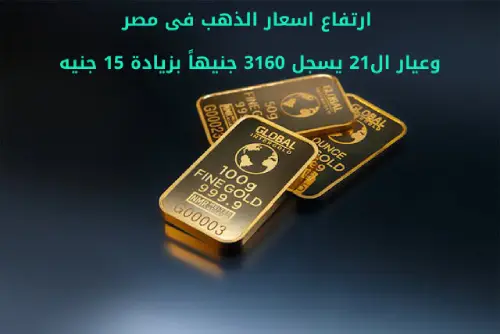
Gold Prices Rise in Egypt and 21-Karat Records 3160 Pounds with a 15-Pound Increase
Gold prices in Egypt rose today by 15 Egyptian pounds per gram. The price of 21-karat gold, the most commonly traded in Egypt, reached 3,160 Egyptian pounds per gram. The international gold price also rose to $2,325 per ounce, reflecting continued global demand for the precious metal as a safe haven amid economic uncertainties.
Gold Prices and Their Relationship to the General Economic Situation
Gold prices are closely linked to global and local economic conditions. When economic uncertainties increase, inflation rises, or geopolitical tensions escalate, investors tend to move toward gold as a safe store of value. In Egypt, gold prices are additionally influenced by the exchange rate of the Egyptian pound against the US dollar, since international gold prices are quoted in dollars.
Gold Price Movements
Current gold prices in Egypt by karat:
- 24-karat gold: 3,611 Egyptian pounds per gram
- 21-karat gold: 3,160 Egyptian pounds per gram
- 18-karat gold: 2,709 Egyptian pounds per gram
- 14-karat gold: 2,107 Egyptian pounds per gram
- Gold Pound (Egyptian gold coin): 25,280 Egyptian pounds
Last Week's Performance
Gold prices recorded notable fluctuations during the past week, influenced by a mix of US economic data releases, Federal Reserve statements, and global geopolitical developments. The overall trend remained upward, with gold maintaining its position above key psychological support levels.
Performance Indicators
Key US economic indicators influencing gold prices this period include:
- Business Activity Index: US business activity reached its highest level in 26 months, suggesting economic resilience that may reduce the urgency for further Fed rate cuts
- GDP Growth: US Gross Domestic Product data showing the pace of economic expansion
- Initial Unemployment Claims: Weekly unemployment claims providing insight into labor market conditions
- Core PCE (Personal Consumption Expenditures): The Federal Reserve's preferred inflation measure, which influences interest rate decisions that directly impact gold prices
The Relationship Between Consumer Goods and Gold Prices
The relationship between gold prices and broader economic conditions operates through three main channels:
First: Supply and Demand
Gold supply is relatively fixed in the short term, determined by mining output and central bank sales. Demand fluctuates based on jewelry purchases, investment demand, and central bank buying. When demand rises faster than supply, prices increase.
Second: Inflation
Gold is traditionally viewed as an inflation hedge. When inflation rises, the purchasing power of paper currencies falls, making gold — which maintains its intrinsic value — more attractive to investors. This relationship drives gold prices higher during inflationary periods.
Third: Global Events
Geopolitical crises, financial market turbulence, and major economic events trigger safe-haven demand for gold. When uncertainty rises, investors shift assets into gold, pushing prices higher regardless of other fundamental factors.
Conclusion
Gold prices in Egypt continue to rise, driven by a combination of international price movements amplified by the weakness of the Egyptian pound against the dollar. For Egyptian investors and consumers, gold remains both a cultural tradition and a practical store of value in an inflationary environment.
Follow us on our channels for daily gold price updates and market analysis.