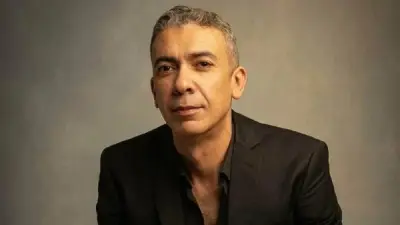
In an era where social media has become capable of creating stars within days, the name Diyaa al-Din Shalabi Muhammad Al-Awadi emerged as one of the most discussed doctors — not because of a traditional medical achievement, but because of ideas that turned concepts of nutrition and treatment upside down.
So how did an academic doctor transform into a controversial phenomenon? And why did his name become associated with one of the most dangerous files: food and the treatment of chronic diseases?
A Quiet Beginning Within University Walls
Available information indicates that Al-Awadi graduated from the Faculty of Medicine at Ain Shams University with distinction, and specialized in anesthesia, intensive care, and pain management, also holding an academic position for several years.
At that stage, his name was not outside the traditional framework — he was a model of the established academic physician, before he decided to embark on a completely different path.
The Turning Point… When He Entered Social Media
With his appearance on digital platforms, Al-Awadi began presenting unconventional ideas, focusing on the concept that food is the key to true healing — giving rise to the concept that later became known as:
"The Tayyibat System" (System of Good Foods)
This proposition was not just ordinary advice, but was more like a revolution against established medical guidelines.
A System That Overturned the Scales
The system he promoted relied on ideas that were shocking to some, such as:
- Increasing the intake of animal fats
- Reducing or eliminating vegetables and fruits
- Dealing with sugar differently from traditional warnings
- Relying on "simple" food as a means of healing
As these ideas spread, the controversy began to escalate rapidly.
Statements That Made a Stir
What further spread Al-Awadi's reach were his direct and bold phrases, such as:
- "You don't have to live on medications all your life"
- "Understand your body… you'll know how to treat yourself"
- "The problem is in the system, not in the disease"
When the Controversy Reached Its Most Dangerous Point: Cancer
The matter did not stop at general nutrition, but extended to include discussion of serious diseases.
According to what was circulated, Al-Awadi linked between:
- Eating patterns
- And internal body health
- And its ability to resist disease
In some of his statements, it was understood that he was suggesting the possibility of reducing reliance on medications even in complex cases.
But here, he faced fierce criticism.
The medical community affirms that:
Diseases such as cancer cannot be dealt with outside the framework of specialized medical treatment, and that nutrition is only an auxiliary factor and not an alternative treatment.
A Clash with the Medical Mainstream
With growing spread, the controversy began to turn into a real confrontation, with news being circulated about:
- Professional measures being taken against him
- Suspension of his medical practice
- Closure of his clinic
Despite the spread of these reports, the precise details still await clear official documentation.
Last Appearance… Messages That Did Not Change
Before his death, a video clip spread that was said to be his last appearance, in which he appeared clinging to the same ideas:
- Focus on food
- Criticism of some traditional medical practices
- Emphasis on the body's ability to recover
However, there was no official confirmation that this video was indeed the last.
The End That Opened the Door to Questions
In April 2026, news of his sudden death in Dubai spread widely, which sparked a broad state of controversy:
- Some spoke of ambiguity in the details
- Others focused on his influence and ideas
- While many waited for a clear official account
To this day, the full picture remains unsettled in public sources.
Why Did His Story Stir All This Controversy?
Simply because it touches on a very sensitive point:
Can food be an alternative to medicine?
The scientific answer so far is clear:
- Food is an important element in health
- But it does not replace medical treatment, especially for serious diseases
Conclusion
The story of Diyaa Al-Awadi is not just a doctor's tale, but a living example of the power and influence of social media in shaping people's convictions, especially in sensitive fields such as health.
Between a supporter who sees in him a thinker with a different perspective, and an opponent who views him as a medical danger, the most important truth remains:
Your health cannot afford experimentation, and any treatment decision must be built on verified knowledge, not a trend.