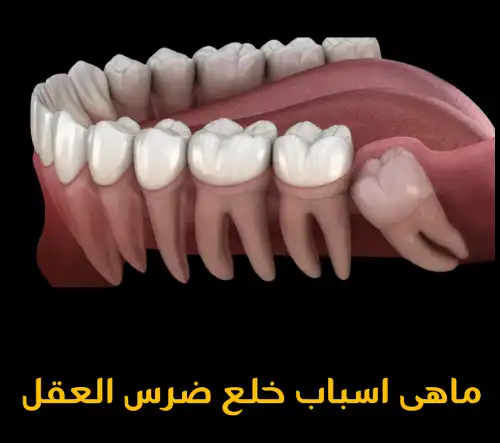
What Are the Reasons for Wisdom Tooth Extraction
What Are the Reasons for Wisdom Tooth Extraction
The Wisdom Tooth: Between Function and Health Problems
The wisdom tooth, or the third molar, is the last tooth to appear in the human oral cavity, typically emerging between the ages of seventeen and twenty-five — the age range during which human intellectual maturity is believed to be complete, hence the name given to it. The emergence of these molars is part of the natural development of teeth, but it is often associated with health challenges that require medical attention.
The Function of the Wisdom Tooth When It Emerges Normally
When the wisdom tooth grows properly and in correct alignment with the adjacent teeth, it performs a functional role similar to the rest of the molars, contributing to the process of grinding food and facilitating digestion. In such typical cases, the tooth poses no risk, and instead becomes an effective part of the jaw's chewing system.
Health Challenges Associated with the Wisdom Tooth
Nevertheless, the vast majority of cases do not follow this ideal pattern, as many people suffer from wisdom teeth emerging partially or at an angle, or they may remain completely buried within the gum tissue or jawbone. These abnormal cases lead to numerous complications, such as:
- Recurrent infections: resulting from the accumulation of bacteria around the incompletely erupted tooth.
- Tooth crowding: which occurs when the third molar pushes the adjacent teeth, causing misalignment of the natural arrangement of teeth.
- Formation of pathological cysts: which may cause damage to the jaw bones or the roots of nearby teeth.
Despite the fact that the wisdom tooth is considered an evolutionary legacy linked to our ancestors who needed stronger jaws to grind uncooked food, the anatomical changes in the modern human jaw have made the space available for it to emerge limited, which explains the high rate of problems associated with it.
Also
In light of these factors, dentists recommend performing periodic examinations to monitor the growth of the wisdom tooth through X-rays, and assessing the necessity of surgical extraction if it causes health problems. While this tooth may have a functional role in rare cases, the consequences of its abnormal emergence make dealing with it one of the fundamental preventive measures for maintaining oral and dental health.
And here, dear brothers and sisters, we have successfully completed our mission ✌
Don't forget our brothers in Palestine in your prayers ًں“Œ
Greetings from the team #MWYC #Digitally_Transformed
You can also view the products of Our Store from here ًں‘ˆ#Our Store ًںŒ·or here
To join our family on the Telegram Group click ًں‘ˆhere
As well as the Facebook Group where we share information and help members ًں‘ˆhere