Egyptian Parliament Sounds the Alarm About Children's Internet Use
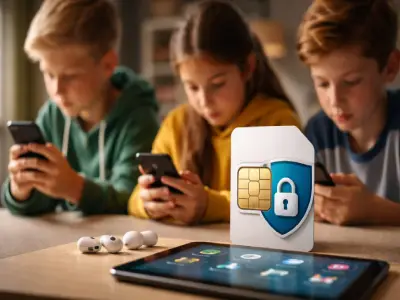
The General Session of the Egyptian Senate, chaired by Counselor Issam Fareed, witnessed an extensive discussion on ways to protect children from the growing risks of digital space, amid parliamentary calls to expedite the launch of mobile SIM cards equipped with parental control features, to limit children's access to inappropriate content on social media.
During the session, a number of council members called on the government — represented by the National Telecommunications Regulatory Authority — to take urgent steps to activate the parental SIM card project, allowing families to monitor their children's internet use and control the type of content they are exposed to, within the framework of protecting children's psychological and behavioral health.
Calls to Strengthen Family and Digital Awareness
Dr. Mohaab Wahba, a member of the Senate, emphasized that confronting digital risks is not limited to technical solutions alone, but requires an active role from the state in raising community awareness among children and parents about safe internet use, warning of the negative effects of uncontrolled use of social media.
Wahba called for the speedy completion of parental SIM cards, describing them as a practical tool that enables parents to directly supervise their children's digital activities.
Proactive Action Rather Than Reaction
For his part, MP Ahmed Shaaban stressed the necessity of both parliament and the government dealing with sensitive societal issues in a proactive manner, rather than responding after crises have worsened, arguing that the discussion of the risks of the internet to children had been somewhat delayed.
He called for closer coordination between both houses of parliament and the executive authority to ensure the rapid adoption of effective decisions that protect society, especially the most vulnerable groups.
The Internet as a National Security Issue
Dr. Nabil Daabas, Chairman of the Education, Scientific Research and Communications Committee in the Senate, affirmed that protecting children from digital risks must be treated as a national security issue, given the serious psychological and behavioral damage caused by some electronic content — which has reached crimes or deaths in some cases.
He called for the development of a comprehensive national awareness plan in which the efforts of various state institutions are integrated, alongside the adoption of regulatory decisions to limit children's access to harmful technologies and content.
Legislative Proposals and International Experiences
Daabas proposed prohibiting the creation of electronic accounts for children under 18 except through secure and impenetrable verification mechanisms, citing international experiences such as Russia. He also called for involving schools, houses of worship, and the media in spreading digital awareness through child-oriented content including animations and educational programs.
In the same context, he called for activating the role of the Ministries of Youth and Sports and Culture in attracting children to alternative activities, reducing internet usage time and supporting psychological and social development.
Demands for Clarification of Government Policies
For his part, MP Mahmoud Muslim called on the government to disclose current and future measures for protecting children from internet risks, presenting a general discussion request on the state's policies in light of international experiences, particularly in Australia and the United Kingdom.
He pointed out that intensive internet use among children is accompanied by multiple threats, including cyberbullying, digital exploitation, and technology addiction, as well as exposure to content inciting violence or self-harm.
He noted that some digital platforms rely on algorithms that generate profits by attracting young users, increasing structural risks such as online grooming.
Between Prohibition and Regulation
Muslim noted that Australia has moved toward imposing strict legislation restricting children's access to digital platforms and requiring companies to verify ages, while the United Kingdom has adopted a more flexible regulatory model focusing on strengthening digital safety standards without resorting to an outright ban. This article comes in the context of the increasing technological transformation, with diverse sources to follow — including Arabic websites and specialized blogs, along with what Egypt stores and Kuwait stores and vitamin stores and foreign websites offer, while relying on Mashhor for social media services as a primary source of information and updates.
And here, dear brothers and sisters, we have successfully completed our mission ✌
Send blessings upon the Prophet, may your hearts find peace, and do good no matter how small 🎯🌷
Don't forget our brothers and sisters everywhere in your prayers 📌
Greetings from the team #Ezznology #Ezz_Technology
You can also browse our store's products from here 👈#Our Store 🌷or here
To join our family on Telegram Group click 👈here
And also our Facebook Group where we share information and help members click 👈here
To subscribe to our newsletter on Google News click here✌👇

or scan the QR code
Other topics you may also find interesting:
13 AI-Led Transformations in the Banking Sector in 2026
7 Fatal Mistakes Users Make When Connecting to Public Wi-Fi
Apple Redraws the Future of Siri: Upcoming Update with Gemini Support to Boost AI Capabilities
Thaura: An Arabic AI Model Redefining Privacy, Values, and Sustainability in 2026