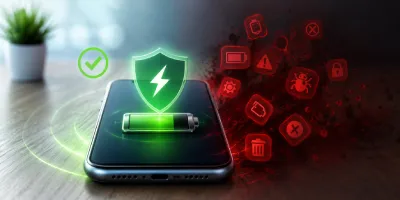
Battery saver apps have spread widely, with promises of extending battery life with a single tap. But the reality is completely different, as technical reports indicate that most of these apps offer no real benefit, and may sometimes even increase power consumption instead of reducing it.
Why Don't They Work as Expected?
Modern smartphones already rely on smart systems to manage battery consumption, whether on Android or iOS. These systems automatically stop unnecessary processes and reduce background app activity to improve performance and battery life.
As a result, power-saving apps often repeat the same tasks without adding any real value, while consuming storage space and device resources in return.
Potential Risks to Performance and Security
Furthermore, some of these apps may conflict with the built-in optimization tools inside the phone, leading to reduced performance or increased battery drain. Worse still, some unreliable apps may contain malware designed to collect data or monitor user activity.
What Actually Helps Save Battery?
Instead of relying on third-party apps, experts recommend following simple but effective steps, such as:
- Reducing screen brightness or enabling auto-brightness
- Turning off Bluetooth and Wi-Fi when not in use
- Disabling background app refresh
- Using dark mode on OLED screens
- Reducing location and microphone permissions for unnecessary apps
Conclusion
In the end, modern smartphones rely on advanced technologies to manage power efficiently, so battery saver apps are often closer to a "marketing illusion" than an actual solution. The best way to extend battery life is to make smart use of the phone's built-in settings.